Design Your Perfect Outdoor Space
A pergola can transform your outdoor space, improving usability, comfort, and property value. Placement, design, and orientation are key factors to maximize its benefits. Here’s what you need to know:
- Increase Property Value: A well-placed high-quality pergola can boost home value by up to 15% and deliver a 50-75% ROI.
- Sunlight and Shade: Orientation matters – east-facing pergolas catch morning light, while west-facing ones are ideal for sunsets.
- Weather Adaptability: Modern louvered systems allow precise control of sunlight and rain, making spaces usable in various conditions.
- Landscape Integration: Pergolas define zones and enhance visual flow, blending with gardens, patios, or pools.
- Material Choices: Aluminum and fiberglass offer durability and low maintenance, while wood adds a rustic touch.
Key Tip: Consider sun paths, proximity to living areas, and building permit requirements to ensure your pergola is both functional and an attractive addition to your property.
Pergola Property Value Impact and ROI Statistics
Sun Path Analysis and Pergola Placement
Knowing how the sun moves across your property is key to deciding where to place your pergola. The sun’s path changes daily and seasonally, which directly impacts how much shade you’ll get and when you’ll want to use the space. This is where bioclimatic design plays a role. It uses adjustable louvers to help control the temperature by blocking harsh summer sun while letting in warmth during winter. These principles guide detailed shade studies and precise louver setups.
Mapping the sun’s path around your home is a simple yet effective way to understand where sunlight will hit your pergola throughout the day.
Conducting a Shade Study
Tracking the sun’s movement is essential for getting the size and placement of your pergola just right. If you’re planning evening dinners, focus on blocking the low-angle western sun. Keep in mind, the sun sits lower in winter and higher in summer, so a setup that works in July might leave you exposed in December.
This is where louvered systems shine, offering flexibility to adapt to changing sunlight. Their adjustable blades, which move between 0° and 170°, let you customize your shade.
North-South vs. East-West Orientation
With your shade study complete, you can fine-tune the pergola’s orientation to improve shade distribution, a particularly crucial step for pergolas with limited louver rotation. North-south orientation allows rafters to cross the sun’s east-to-west path, creating consistent shade as the sun moves across the sky. On the other hand, an east-west orientation follows the sun’s path, allowing more sunlight in during the day but may require tighter rafter spacing to avoid streaks of light slipping through.
South-facing setups often deal with intense heat during summer. Here, strategic louver adjustments can block direct overhead sunlight while still allowing airflow. West-facing pergolas face an even bigger challenge, as intense afternoon heat combined with low-angle glare. Without adjustable shading, these areas can become almost unusable.
Even the rotation direction of motorized louvers can make a difference. For north or west-facing pergolas, a counter-clockwise opening works best, while east or south-facing ones benefit from a clockwise rotation. This ensures the louvers block excessive sunlight while still allowing some light and airflow. As Lacentrale-eco explains:
Fortunately, StruXure pergolas feature louvers that rotate a full 170 degrees, eliminating the orientation constraints experienced with other systems. You can precisely adjust the louvers, allowing you to block harsh sun at any angle or invite in gentle daylight, without the headache of determining the “right” orientation for shade.
For spaces subject to intense sun exposure, such as west-facing decks or patios, integrated retractable screens can also be added, offering on-demand relief and transforming outdoor areas into luxurious, comfortable retreats regardless of the sun’s position.
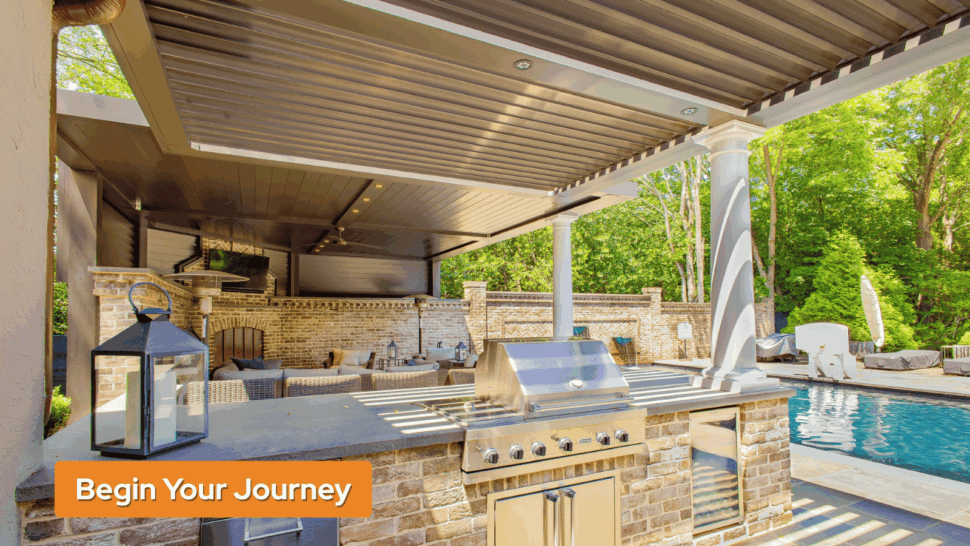
StruXure North Carolina | North Carolina
Improving Landscape Aesthetics with Pergola Placement
A thoughtfully positioned pergola serves as a visual link between different outdoor areas, creating a seamless connection while maintaining open sightlines. Its open framework defines spaces like dining areas, lounging spots, or even outdoor kitchens without making them feel enclosed.
This dual role of enhancing both functionality and appearance makes pergolas a valuable addition to any yard. They not only elevate the visual appeal but can also boost property value by improving how the space is used.
Pergolas also play a clever visual trick by breaking up vertical lines and providing partial overhead coverage, which can make a garden or courtyard feel more expansive. Attached pergolas blur the line between indoor and outdoor spaces, while freestanding ones create distinct focal points that draw the eye.
Your local StruXure Dealer can guide you in determining the optimal placement and orientation for your pergola.
Integrating Pergolas with Garden Features
Pergolas do more than define spaces: they blend effortlessly with garden elements. Adding lattice or wire trellises allows climbing plants like Clematis, Carolina Jessamine, Coral Honeysuckle, or Passion Flower to form a vibrant, living canopy that evolves with the seasons.
Positioning pergolas over pathways creates elegant transitions between outdoor zones. For example, they can guide movement from a patio to a garden or connect a main living area to a detached studio.
The materials you choose for your pergola can also shape its overall aesthetic. Wood brings a warm, rustic feel, while aluminum or steel fits well with modern, minimalist designs. Modern styles often feature clean lines and square posts, while traditional designs lean into decorative rafter tails and curved accents.
Creating Sightlines and Visual Flow
Pergolas excel at preserving open views while defining distinct areas, making your outdoor spaces feel more spacious. Their open-sided design can frame specific focal points, such as a water feature, a statue, or even a distant landscape. When attached near a home’s main entrances, they extend the interior flow outdoors, creating a natural transition.
For uninterrupted views, cantilevered pergolas minimize posts by extending the roof beyond the supporting structure. Fiberglass pergolas work well in larger yards, offering wide spans without breaking up sightlines.
With highly customizable pergolas like the Pergola X by StruXure, you can position the posts further back to maintain clear, open views without compromising structural integrity. This allows you to strike the perfect balance between style and outdoor comfort, combining aesthetic appeal with practical functionality.
Property Value and Usability Impact
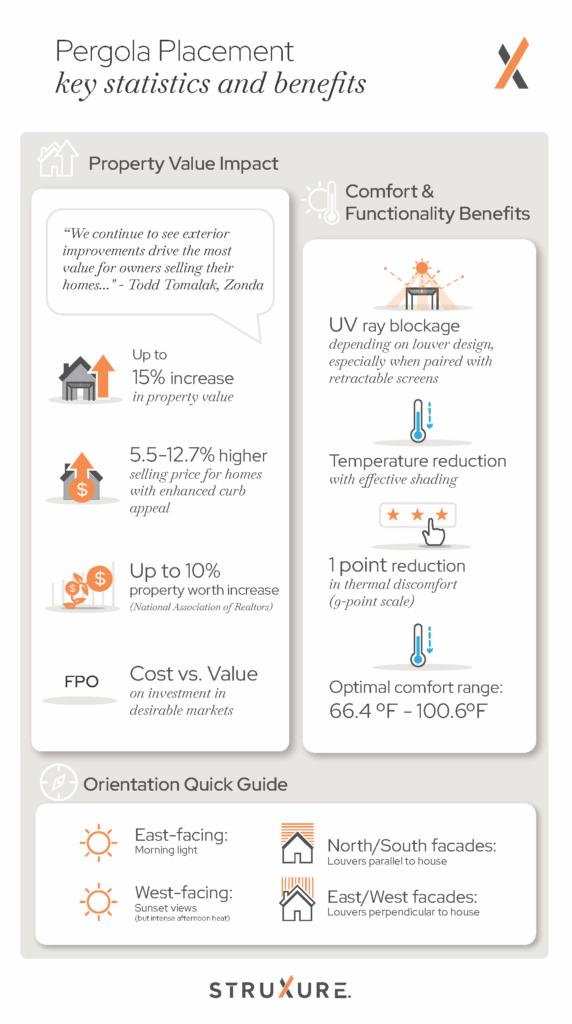
Strategically placing a pergola does more than enhance your outdoor space. It can significantly increase your property’s perceived value. A thoughtfully positioned permanent pergola not only expands usable space but can also boost property value by up to 15%, offering a cost-effective alternative to more traditional home improvements.
Homes with enhanced curb appeal tend to sell for 5.5% to 12.7% more than comparable properties without such features.
“We continue to see exterior improvements drive the most value for owners selling their homes…” – Todd Tomalak, Zonda
Proximity to Main Living Areas
Where you place your pergola matters just as much as the structure itself. Locating it close to high-traffic areas like patios, outdoor kitchens, or main entrances creates a seamless transition between indoor and outdoor spaces. This integration is a feature that modern homebuyers actively look for. For instance, placing a pergola near your kitchen door simplifies outdoor dining, while situating it near a pool creates a shaded retreat that sees daily use.
To maximize usability and value, ensure your pergola meets local building codes. While many areas require a 105 mph wind load capacity and anchoring with concrete footers at least 3 feet deep, StruXure pergolas are engineered to withstand winds of up to 150 mph, offering superior resilience. These structural considerations not only enhance functionality but also contribute significantly to your ROI, making the pergola a practical and appealing addition for potential buyers.
Return on Investment for Pergola Installations
The financial upside of a well-designed pergola is hard to ignore. Typical installation costs can be expensive, yet they can add to your home’s market value. High-end systems offer even greater potential value. According to the National Association of Realtors, outdoor living features can increase a property’s worth by up to 10%.
Material choice plays a critical role in determining long-term value. Aluminum pergolas with powder-coated finishes often provide a better ROI than wood, as they resist cracking, warping, and the need for ongoing maintenance like staining. Modern louvered systems, such as those from StruXure, take it a step further by offering adjustable weather protection, making the space usable year-round rather than just during ideal conditions.
To ensure your pergola adds value, it should complement your home’s architectural style and integrate seamlessly with existing features like decks or pools. A poorly matched design can detract from your property’s appeal, while a cohesive installation becomes a standout feature, something that 79% of real estate agents highlight when marketing homes.
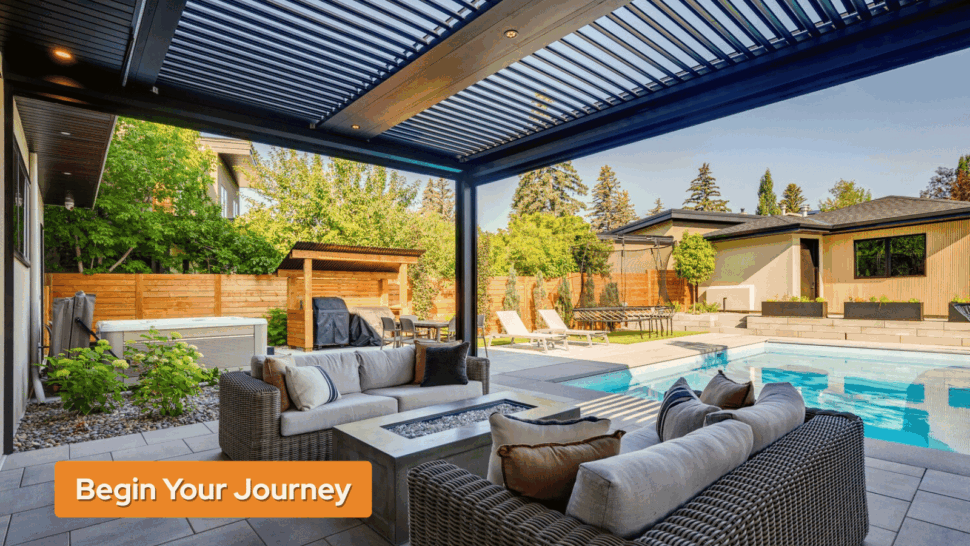
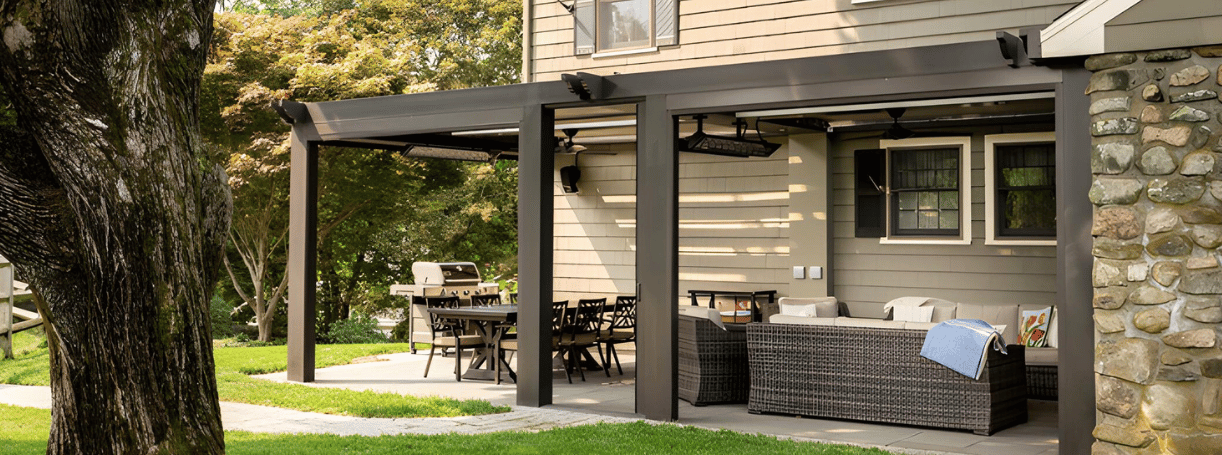
Suite Outdoor | Albany, CA
Design Considerations for Comfort and Well-Being
The strategic placement of a pergola can redefine outdoor spaces, improving comfort and safety by providing effective shade.
UV Protection and Safer Outdoor Environments
Patios facing south or west often endure intense sunlight, especially during the afternoon, making them uncomfortable or even unusable. A well-placed pergola (especially one with retractable screens) can easily block the sun’s rays, depending on the louver design.
Modern louvered pergolas come with adjustable slats that allow for both UV protection and ventilation. When fully closed, they offer complete shade. Powder-coated aluminum louvers are especially effective, as they reflect sunlight instead of absorbing it, helping to keep the area beneath cooler. To maintain consistent shading as the sun moves, designs with overhangs extending at least 1’6″ beyond the posts are recommended. For example, a 16′ x 16′ pergola is typically sufficient to shade a 14′ x 14′ patio.
Beyond blocking UV rays, these structures also play a key role in managing outdoor temperatures, ensuring a more comfortable environment.
Temperature Regulation and Thermal Comfort
In addition to shielding against harmful UV rays, pergolas help regulate outdoor temperatures by reducing direct heat from the sun. Research from Arizona State University highlights that shade can lower thermal discomfort by about one point on a 9-point scale, making the difference between feeling “hot” and “warm.” A year-long study at ASU’s Tempe campus, conducted by Ariane Middel and Nancy Selover, surveyed over 1,200 individuals under a large solar canopy. Their findings showed that artificial shade was as effective as dense tree cover in reducing heat stress, with the ideal comfort range being between 66.4°F and 100.6°F.
Adjustable louver systems provide flexibility in managing solar exposure. During summer, closing the louvers blocks heat and can even help lower indoor cooling costs. In winter, opening them allows sunlight to warm the space naturally, something fixed structures cannot achieve.
To further enhance usability, motorized screens, fans, and heating systems can be added, making the pergola functional year-round. These modern upgrades turn a pergola into a versatile outdoor space that adapts to both seasonal and daily weather changes.
Brands like StruXure incorporate these thoughtful design elements, ensuring your outdoor space stays comfortable and adaptable no matter the season.
The placement of a pergola can completely transform your outdoor space, combining style, purpose, and long-term value. Studies highlight the importance of considering factors like sun orientation, landscape features, and proximity to living areas for the best results.
A well-placed pergola isn’t just about looks. It’s about creating a functional centerpiece. It can define areas for dining, cooking, or relaxing while seamlessly connecting indoor and outdoor living spaces. This thoughtful design approach can even make your home feel larger by extending its usable area.
High-quality, customizable pergola systems bring tangible benefits. For example, effective shading can lower the surrounding temperature for maximum comfort. Additionally, permanent structures can enhance property appeal, making outdoor areas more attractive to buyers. Modern engineered systems allow for precise customization, including angles, pitches, and roof designs, ensuring both practicality and style.
Today’s louvered pergolas take functionality to the next level. With adjustable slats, durable powder-coated aluminum, and integrated technology, they provide year-round comfort. You can control sunlight, improve airflow, and adapt to weather changes, creating a space that works in every season.
StruXure takes these principles to heart, offering ICC-certified systems designed for durability and elegance. Backed by American craftsmanship and a limited lifetime warranty, these pergolas are perfect for everything from a poolside oasis to an expanded outdoor kitchen. With the right placement and design, your pergola can truly elevate your outdoor living experience.
FAQs
How does the direction and placement of a pergola impact its comfort and functionality?
The way you position and orient your pergola has a big impact on how much sunlight, shade, and airflow it provides, which directly affects how comfortable and functional the space will be. For example, setting up your pergola to block the sun during the hottest parts of the day can make your outdoor area much cooler and more pleasant, especially if you live in a warmer area. If you opt for motorized pergolas with adjustable louvers, you can fine-tune the amount of shade and ventilation to match the weather or your mood.
Where you place your pergola matters just as much. It affects how it fits into your outdoor space and supports activities like dining, lounging, or hosting guests. Thoughtful placement can also give you more privacy and enhance the overall look of your yard. A well-placed pergola doesn’t just improve comfort. It can also add value to your home and make your outdoor space feel more inviting.
What materials are best for building a durable, low-maintenance pergola?
For a pergola that stands the test of time while requiring little effort to maintain, powder-coated aluminum is an excellent option. It resists weather-related damage, won’t warp or crack as the years go by, and needs very little upkeep, making it a smart and durable choice for outdoor spaces.
Beyond its strength, aluminum pergolas often boast sleek, contemporary designs that pair well with many architectural styles. Plus, they’re built to handle all kinds of weather conditions, ensuring they stay both functional and attractive throughout the year.
How does adding a pergola improve my outdoor space and property value?
A pergola can completely change the feel of your outdoor space, offering both style and practicality. Acting as a standout feature, it adds visual appeal and a touch of architectural charm to your home. Beyond aesthetics, it creates a comfortable shaded area, making your backyard or patio more inviting, perfect for relaxing, hosting gatherings, or enjoying meals outside in any season.
But the benefits don’t stop there. A pergola can also increase your property’s value by enhancing curb appeal and functionality. Homebuyers often see structures like pergolas as attractive additions, especially when crafted from durable materials and tailored to fit the space. This blend of beauty and usability makes a pergola a worthwhile upgrade, improving your outdoor living experience while adding long-term value to your home.