Design Your Perfect Outdoor Space
The International Code Council (ICC) is the leading global source of model codes and standards and building safety solutions that include product evaluation, accreditation, technology, training, and certification. Obtaining an ICC certification ensures that commercial pergolas meet strict U.S. building codes for safety, structural integrity, and durability.
This certification is critical for public spaces such as restaurants, hotels, and retail areas, where structures must withstand heavy loads, extreme weather, and high occupancy. Without it, businesses risk permit rejections, safety hazards, and liability issues. Here’s what you need to know:
- What it means: ICC certification verifies compliance with the International Building Code (IBC), covering structural loads, wind resistance, fire safety, and material durability.
- Why it matters: Non-certified pergolas can lead to project delays, failed inspections, and safety risks. Certified structures simplify permitting, ensure reliability, and reduce liability.
- Key standards: Certified pergolas must meet the IBC Chapter 16 requirements, including load-handling and material specifications.
- Business benefits: Faster permit approvals, lower maintenance costs, and better protection against extreme weather make ICC-certified pergolas a smart investment.
StruXure is the first louvered pergola manufacturer to achieve ICC certification, offering systems tested for high wind and snow loads, making them a reliable choice for commercial projects.
ICC-Certified vs Non-Certified Commercial Pergolas Comparison
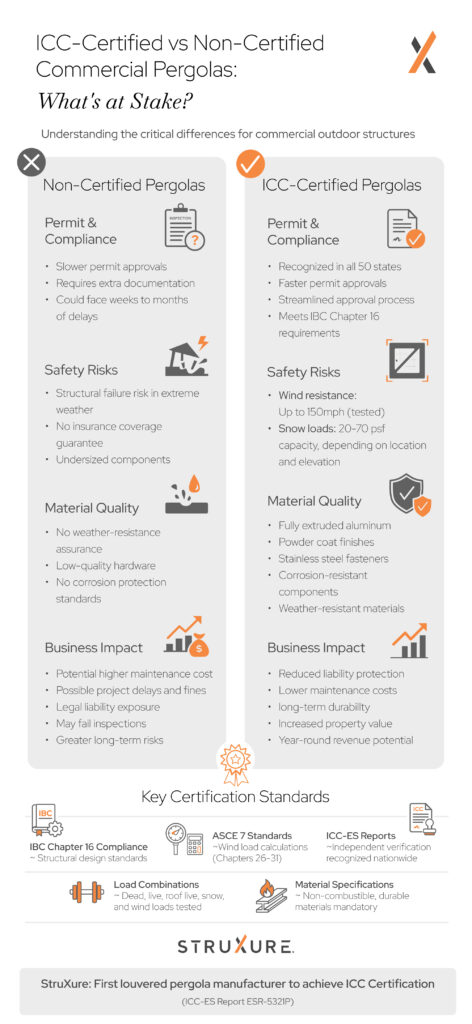
Problems with Non-Certified Commercial Pergolas
Skipping ICC certification might seem like a shortcut, but it can create serious, costly problems. Here’s what can happen when you opt for a non-certified commercial pergola.
Building Code Violations and Permit Issues
Red Tag Stop-Work Orders are every project manager’s nightmare. Local inspectors can shut down your construction immediately if your pergola doesn’t meet certification or permit requirements. This isn’t a small hiccup. It can derail your project for weeks or even months.
Take, for example, a project near Austin, TX. Without the necessary permits, the construction faced a Red Tag Stop-Work Order, hefty fines, redesign costs, and delays stretching over weeks.
Non-certified pergolas also face slower permit approvals. While ICC-certified products often breeze through the process, non-certified ones require extra documentation, independent engineering reviews, and tedious back-and-forth with local authorities. Beyond the bureaucratic headaches, these gaps in compliance can lead to safety risks and legal troubles.
Safety Risks and Legal Responsibility
The most alarming issue with non-certified pergolas is structural failure. These structures often fail to meet IBC standards for wind speeds and snow loads, making them vulnerable during extreme weather.
Non-certified systems can fail to meet the strict standards required for structural performance. Without this certification, louvers may be inadequately braced, poorly anchored, or constructed from substandard materials, leading to increased risk of failure and serious safety concerns.
Insurance coverage may be difficult to secure, and legal liability exposure rises. This absence of certification makes the structure less dependable during severe weather, further compounding potential risks.
Weak Performance in Harsh Weather
Non-certified pergolas may rely on undersized components and low-quality hardware, undermining their strength. Building inspectors often flag improper hardware connections and missing waterproofing or flashing.
Material quality is another red flag. Without certification, there’s no assurance that the materials are weather-resistant or corrosion-protected. Over time, this leads to weakened joints and compromised structural integrity. This is especially problematic for commercial projects where long-term reliability is critical.
On the other hand, ICC-certified commercial pergolas are made with properly sized components and weather-resistant materials, ensuring durability even in extreme conditions. Ignoring these quality standards can result in higher maintenance costs and greater business risks in the long run.
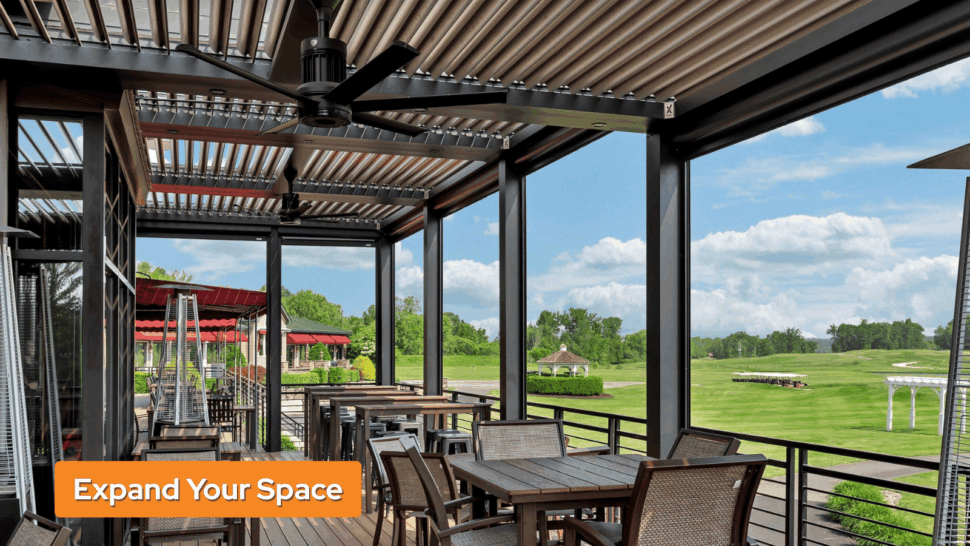
Decadent Outdoors | Ballston Lake, NY
ICC Certification Requirements for Commercial Pergolas
Understanding ICC certification sheds light on why it’s considered the gold standard for commercial outdoor structures. This certification ensures that pergolas meet strict standards for structural integrity, safety, and durability, forming the backbone of reliable and secure outdoor installations.
Core ICC Standards for Pergola Construction
When it comes to ICC certification, commercial pergolas must adhere to the International Building Code (IBC) Chapter 16, which governs structural design for regulated structures. The 2021 IBC specifies: “The provisions of this chapter shall govern the structural design of buildings, structures and portions thereof regulated by this code.”
Key requirements include:
- Risk Category assignment: Most commercial pergolas fall under Risk Category II. However, for venues accommodating over 300 people – like event spaces or large dining areas – Risk Category III applies, requiring stricter standards.
- Load handling: Pergolas must endure various load combinations, including dead, live, roof live, snow, and wind loads. Wind load calculations follow ASCE 7 standards (Chapters 26–31), factoring in Exposure Categories B or C for high-performance structures.
- Deflection limits: To prevent excessive sagging, aluminum members in patio covers must limit total load deflection to l/60.
- Anchorage and stability: Proper foundation connections are essential to resist wind uplift and seismic loads, preventing sliding or instability.
- Material specifications: Durable, non-combustible materials are mandatory, typically including fully extruded aluminum, powder coat finishes, and stainless steel fasteners.
These standards ensure that commercial pergolas are not only functional but also resilient under varying conditions.
How ICC-ES Reports Work
ICC Evaluation Service (ICC-ES) reports provide independent verification that a product complies with specific building codes and standards. These reports simplify the compliance process for both manufacturers and building officials.
Manufacturers seeking ICC-ES certification subject their products to extensive testing. The resulting report outlines how the product performs under conditions like wind, snow, and structural stress, while referencing the relevant code sections and test standards. This gives local building officials confidence in the product’s compliance without needing additional engineering reviews.
For contractors, ICC-ES reports streamline permit approvals. Instead of submitting custom engineering calculations for every project, they can simply reference the ICC-ES report number. Recognized nationwide, these reports are especially useful for businesses operating across multiple jurisdictions, saving time and effort.
Advantages of ICC-Certified Materials and Construction
Using ICC-certified materials and construction methods provides more than just certification: it guarantees long-term safety and reliability. These standards are designed to prevent injuries and structural failures, even under extreme conditions.
Material quality is another critical factor. ICC-certified systems use components specifically engineered for outdoor conditions. Fully extruded aluminum resists corrosion, stainless steel fasteners prevent rust, and powder coat finishes endure harsh weather, including heat, rain, and ice. These features are not optional upgrades but essential elements that protect both your investment and your customers for decades to come.
How StruXure Meets ICC Certification Standards
StruXure stands out as the first and only louvered pergola manufacturer to achieve ICC certification. This recognition, confirmed by ICC-ES Report ESR-5321P, validates the performance of its systems under high-wind and snow conditions. The certification covers the louvers, ensuring unmatched reliability where it matters most. Let’s break down how StruXure’s certified systems deliver both safety and performance.
StruXure’s ICC-Certified Product Line
StruXure’s Pivot 6 louvers are ICC-certified. These louvers are made from fully extruded aluminum with powder-coated finishes and stainless steel fasteners, offering commercial-grade durability. They can withstand 150 mph winds, while the framework supports 20–70 psf snow loads, depending on the location and elevation.
Frank Bennardo, PE and CEO of Engineering Express, highlights the importance of this certification:
“The ICC report provides a clear overview of the performance capabilities of the pergola system. It’s not just about the louvers; it encompasses the supporting beams, columns, and connections, all tested together for maximum wind and snow conditions.”
Engineered for Safety and Long-Term Performance
StruXure systems incorporate advanced safety features, including real-time automation. Wind sensors automatically open the roof at 60 mph, while rain sensors close the louvers immediately, adapting to changing weather conditions. The interlocking louvers create a watertight seal, channeling water into a hidden gutter system to prevent pooling and reduce stress on the structure.
Each component is designed to work seamlessly under extreme conditions. The louvers rotate up to 170 degrees, offering precise control over light and ventilation. Additionally, the powder-coated aluminum resists corrosion, even in challenging environments like coastal areas, industrial zones, or regions with heavy snow and rain. This combination of certification and smart engineering addresses the safety concerns and permitting challenges often associated with non-certified designs.
Custom Commercial Solutions That Meet Code
StruXure’s certified systems also offer flexibility for custom commercial applications. Thanks to the ICC-ES report, configurations can be adjusted to meet specific site conditions through interpolation and extrapolation of the evaluated designs. This allows architects and designers to tailor systems for a wide range of uses, from restaurant patios to multi-family amenities, while maintaining full code compliance.
For commercial clients, this means faster permit approvals. Building officials across the U.S. recognize ICC-ES reports, simplifying the approval process. Instead of requiring custom engineering calculations for every project, contractors can reference Report ESR-5321P, streamlining permits from California to Florida and beyond.
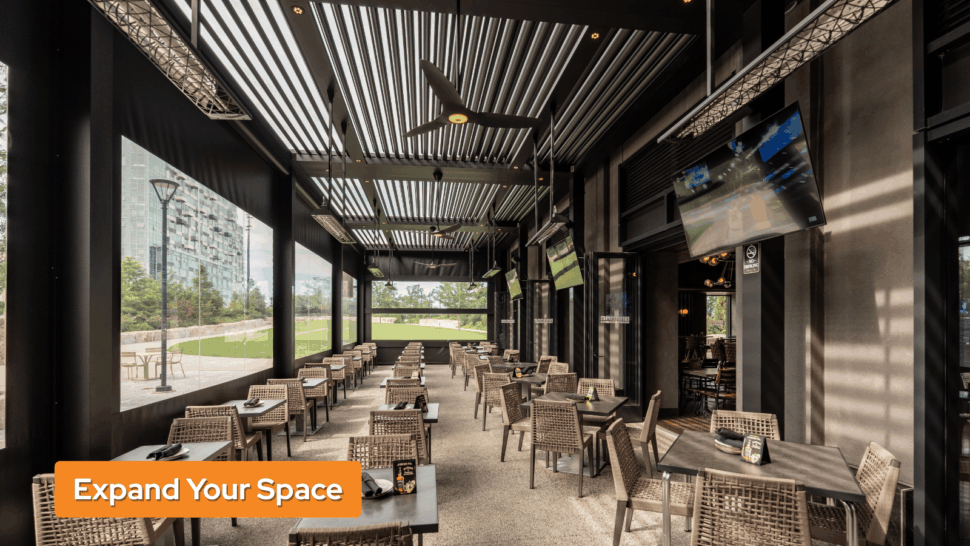
Boston Pergolas | Boston, MA
Business Advantages of ICC-Certified Pergolas
ICC certification not only ensures safety and code compliance but also offers meaningful benefits that can improve your business operations. These perks can help streamline processes, cut costs, and shield your business from unexpected liabilities. Over time, these advantages add up, making certification a smart business move rather than just meeting a regulatory requirement.
Faster Permit Approvals and Code Compliance
One standout benefit of ICC-certified pergolas is how they simplify and speed up the permitting process. Since ICC-ES reports are recognized by building officials in all 50 states, there’s no need for custom engineering calculations. This saves time and eliminates costly delays. Without certification, businesses often face extra expenses for engineering, architectural adjustments, and extended permit reviews, resulting in costs that can quickly run into thousands of dollars.
StruXure Mid-Atlantic highlights this efficiency:
“Certified companies can implement building codes effectively, reducing errors, legal risks, and ensuring compliance with changing regulations.”
By expediting approvals, ICC-certified structures also reduce the time your business is exposed to potential risks.
Reduced Safety Risks and Liability Protection
Liability concerns are a major headache for businesses, but ICC certification helps address these issues upfront. Certified pergolas meet strict performance standards designed to prevent injuries and structural failures. Even in extreme conditions, these structures are tested to withstand localized damage without catastrophic failure. This level of durability not only protects occupants but also minimizes the risk of legal claims and insurance issues.
When combined with quicker permitting, reduced liability creates a strong foundation for long-term financial stability.
Better Durability and Return on Investment
The benefits of ICC certification extend well beyond installation and into the future. Certified pergolas are built for durability, often outlasting non-certified alternatives. For example, their powder-coated aluminum construction resists corrosion in challenging environments like coastal or high-precipitation areas. This durability can significantly cut maintenance costs over the years.
This kind of expanded usability directly impacts revenue. Restaurants, for instance, can serve more customers throughout the year, while event venues can host outdoor functions regardless of the weather. Additionally, transferable warranties and proven resilience enhance property value and turn these structures into long-term assets. ICC-certified pergolas truly offer performance that stands the test of time.
The Importance of ICC Certification for Commercial Pergolas
ICC certification plays a crucial role in ensuring the safety, compliance, and financial stability of commercial outdoor structures. Without this independent verification, businesses risk permit denials, increased liability, and structural failures under harsh weather conditions. The certification process ensures that the pergola louvers are engineered to work together and withstand maximum wind and snow loads, giving business owners the confidence needed for seamless project approvals.
This certification is not merely a technical detail. It represents a significant advancement for commercial projects. StruXure stands out as the first pergola manufacturer to achieve ICC certification, setting a benchmark in the outdoor living industry.
“The ICC certification is more than a badge; it’s a ticket to credibility. For dealers, it signals to prospective buyers and permitting authorities that our pergolas meet the highest standards of safety, quality, and reliability.” – StruXure
The benefits go well beyond installation. While earlier sections have detailed these advantages, the core message is simple: ICC-certified pergolas ensure proven performance, protecting both the people who use them and the investment made in them. This certification turns compliance into a strategic advantage.
FAQs
Why is ICC certification important for commercial pergolas?
ICC certification plays a key role in ensuring that commercial pergolas meet strict safety, quality, and performance standards. One of its biggest advantages? It simplifies the permitting process, making it quicker and more straightforward to get the necessary approvals.
For business owners, architects, and contractors, ICC-certified pergolas offer more than just compliance. They provide confidence in the structure’s reliability and durability. This certification helps build trust with clients and regulatory bodies while ensuring the creation of safe, sturdy outdoor spaces that stand the test of time.
Why is it risky to use non-certified pergolas in commercial spaces?
Using pergolas that aren’t certified in commercial spaces can create a host of problems. For one, they might not meet crucial safety and quality standards, which increases the chances of accidents or even structural failures. This could result in serious safety concerns for your space.
On top of that, non-certified pergolas can delay the process of securing permits and approvals, throwing off your project timeline. There’s also the risk of legal liabilities and unexpected costs down the road due to repairs or replacements. Opting for an ICC-certified pergola ensures it meets strict safety, durability, and performance requirements, giving you confidence in its reliability.
Why is ICC certification important for getting permits for commercial pergolas?
ICC certification plays a key role in ensuring that commercial pergolas align with established safety and building codes. By confirming pre-verified compliance, this certification streamlines the permitting process, making it easier to secure approvals while minimizing the risk of delays or potential legal issues.
For businesses, this translates to a more efficient journey toward building functional, code-compliant outdoor spaces, ultimately saving both time and money.