Design Your Perfect Outdoor Space
Outdoor spaces at hospitals aren’t just decorative. They’re crucial for patient recovery, staff well-being, and visitor comfort. Research shows that access to nature can reduce stress, lower pain levels, and even speed up recovery. Here’s a quick breakdown of how to design effective outdoor hospital areas:
- Understand User Needs: Design for patients, staff, and visitors by considering accessibility, privacy, and comfort.
- Evaluate the Site: Account for sun exposure, wind patterns, and topography to create a safe, functional layout.
- Prioritize Accessibility: Pathways should be wide, stable, and easy to navigate for wheelchairs and mobility aids.
- Choose Durable Materials: Use slip-resistant, weather-resistant surfaces and low-maintenance materials like powder-coated aluminum commercial pergolas.
- Incorporate Nature: Add plants, water features, and shaded seating to create a calming environment.
- Plan for Weather: Install adjustable shade systems to ensure year-round usability.
5-Step Process for Designing Healing Hospital Outdoor Spaces
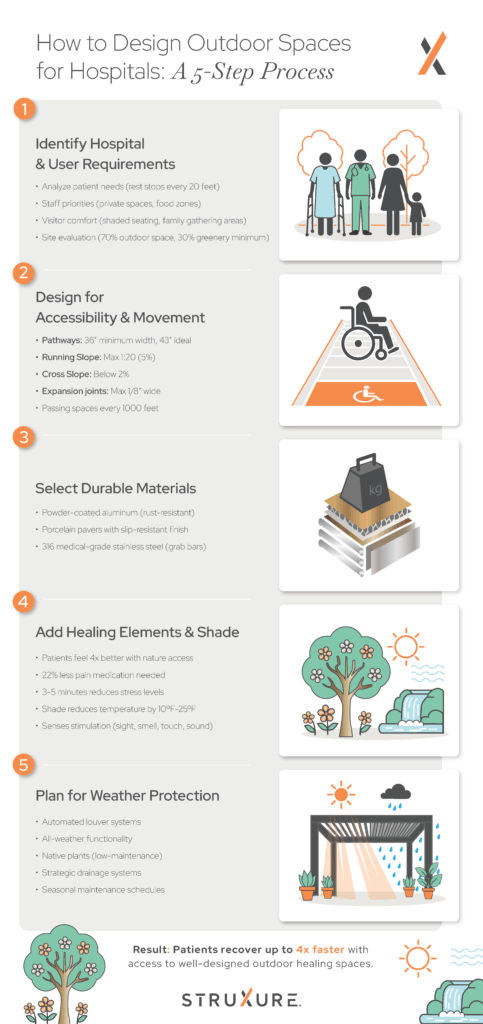
Step 1: Identify Hospital and User Requirements
The first step in designing a hospital’s outdoor space is understanding who will use it and what they need. These insights shape every design choice, from pathway widths to seating layouts.
Analyze User Demographics
Patients often need spaces that promote both physical and emotional recovery. For those recovering from surgery, rest stops should be placed every 20 feet, with the first one clearly visible from the entrance. Elderly patients using canes or walkers benefit from pathways where expansion joints are no wider than 1/8 inch, reducing the risk of tripping. Patients with dementia require simple looped paths such as figure-eight designs that guide them back to the starting point, avoiding confusing forks or intersections. Additionally, all plants must be non-toxic, as some patients may attempt to ingest them.
Staff members often make up the largest group of users in a hospital. They need private spaces, such as commercial courtyards or rooftop gardens, to decompress and combat burnout. A November 2020 study at Southwest Hospital in Chongqing found that staff prioritized food and delivery zones near their areas, rating this need 4.61 out of 5, the highest among user groups.
Visitors benefit from comfortable outdoor waiting areas with shaded seating. Spaces designed for family groups to gather and share meals should be located away from noisy roads and high-traffic areas to enhance privacy and relaxation.
Once user needs are clear, the next step is to evaluate the site to ensure it supports these priorities.
Review Site Conditions
Start by examining the hospital’s outdoor space, including the available area, existing structures, and environmental features. Outdoor spaces can make up as much as 70% of the site, with at least 30% dedicated to greenery. Pay close attention to sun exposure throughout the day, particularly for patients on psychotropic medications who are more sensitive to UV light and glare. Analyze wind patterns to pinpoint areas needing windbreaks or additional shelter. Water features can be strategically placed to drown out hospital noise and create a calmer atmosphere.
Topography is another critical factor. Ensure proper drainage and flat, stable pathways to accommodate wheelchairs. Finally, review existing buildings, pathways, and utilities to seamlessly integrate new designs while maintaining clear landmarks and intuitive layouts for users with impaired spatial awareness.
Step 2: Design the Layout for Accessibility and Movement
Once you’ve identified user needs and evaluated the site, the next step is to create a layout that allows for safe, easy movement for everyone. This includes designing pathways and areas that accommodate wheelchairs, walkers, and other mobility aids. The focus should be on ensuring these spaces are both accessible and functional.
Build Accessible Pathways
Pathways are the foundation of any hospital’s outdoor space. To ensure accessibility, they should be at least 36 inches wide, though 43 inches is ideal for turning ease. For narrower paths (less than 60 inches), the Access Board suggests adding passing spaces every 1,000 feet to allow those using mobility devices to pass one another comfortably.
Choose a surface that’s stable and slip-resistant, ensuring it doesn’t shift or become slick when wet. Keep the running slope gentle, no more than 1:20 (5%) to make navigation easier for wheelchair users and those with walkers. Cross slopes should remain below 2% to prevent wheelchairs from drifting off course.
Creating barrier-free hospital gardens is essential and includes features such as adequate maneuvering space near doors, stable ground surfaces for accessibility, automatic door openers, tactile indicators, and clear signage to support navigation. Adding benches along pathways offers much-needed resting spots, especially for patients recovering from surgery or those with limited stamina.
Once pathways are in place, the next step is to divide the area into zones that cater to the unique needs of different users.
Organize Functional Zones
After establishing accessible pathways, divide the outdoor space into distinct zones that serve patients, staff, and visitors. For patient recovery areas, prioritize quiet zones with simple, looped pathways to prevent disorientation. These spaces should be surrounded by nature and positioned far from noisy streets or high-traffic areas.
Staff break areas should offer privacy and separation from patient zones. Rooftop gardens or secluded courtyards can provide a peaceful space where staff can unwind without distractions. For visitor seating zones, focus on shaded, comfortable spots that allow families to gather. Adding views of greenery can create a calming and welcoming environment.
The benefits of this zoned approach are well-documented. At the City of Hope Cancer Center, a healing garden improved patient satisfaction and reduced stress levels for both patients and staff. Similarly, Massachusetts General Hospital introduced a meditation square that offers a peaceful retreat for patients and visitors, enhancing their overall experience.
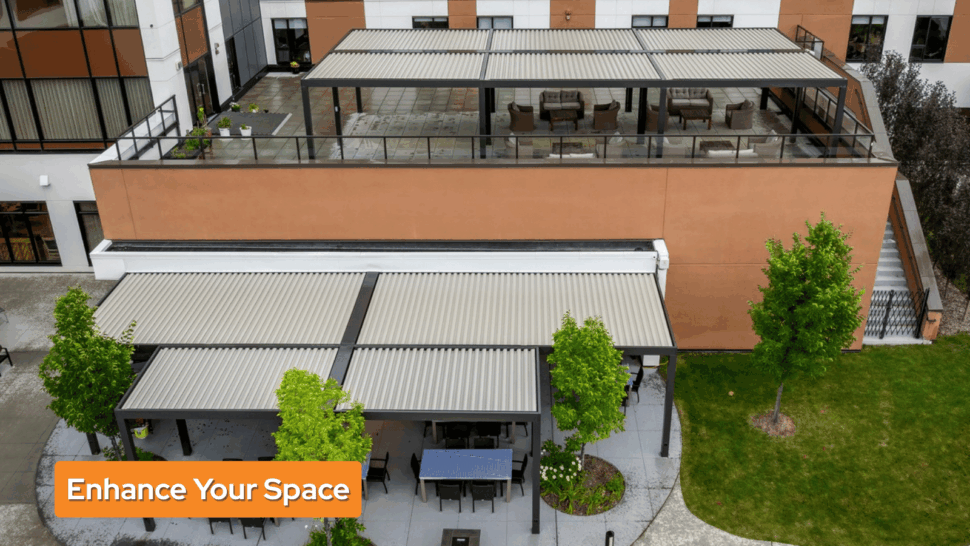
Suite Outdoors | Calgary, AB
Step 3: Select Durable and Low-Maintenance Materials
Hospital outdoor spaces face constant challenges from heavy use and harsh weather. That’s why material choices need to prioritize durability, ease of maintenance, and safety. By selecting the right surfaces and structures, you can ensure these spaces remain functional and visually appealing for years to come.
Use Weather-Resistant Materials
For outdoor furniture and structural frames, powder-coated aluminum is an excellent choice. It’s lightweight, resists rust and corrosion, and can be easily moved when necessary. For pathways and patios, opt for porcelain pavers with an R11 finish. These pavers not only provide slip resistance in wet conditions but also handle the weight of wheelchairs and medical equipment without cracking.
For high-touch surfaces, non-porous materials like solid surfaces or high-pressure laminates are ideal. These materials stand up to repeated cleaning with disinfectants and reduce the risk of microbial buildup. For grab bars or railings, 316 medical-grade stainless steel is a must, offering superior corrosion resistance in moisture-prone areas.
“Non-porous surfaces that prevent microbes and bacteria from accumulating are the best practice.” – Neumann Monson
Lastly, avoid materials like untinted concrete or white aluminum that create glare, which can be challenging for older eyes to handle.
Add StruXure Systems for Weather Control
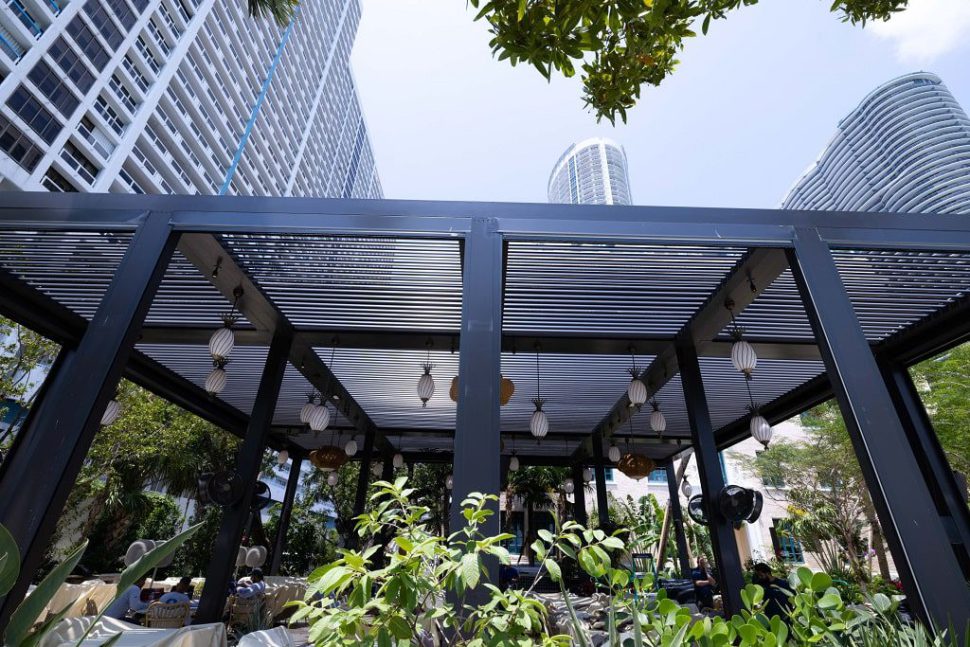
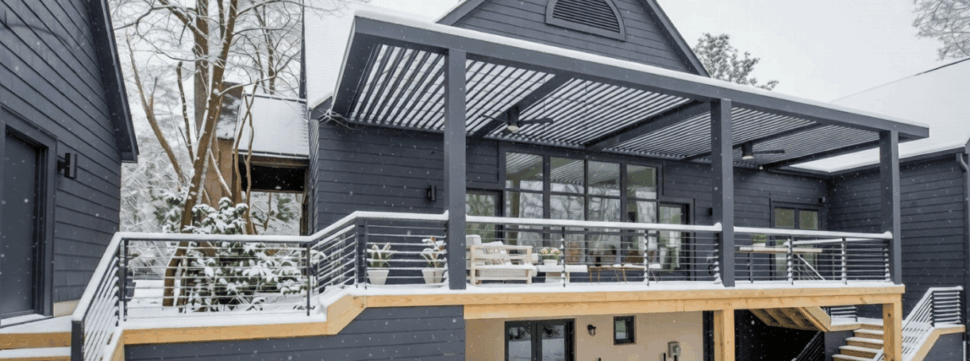
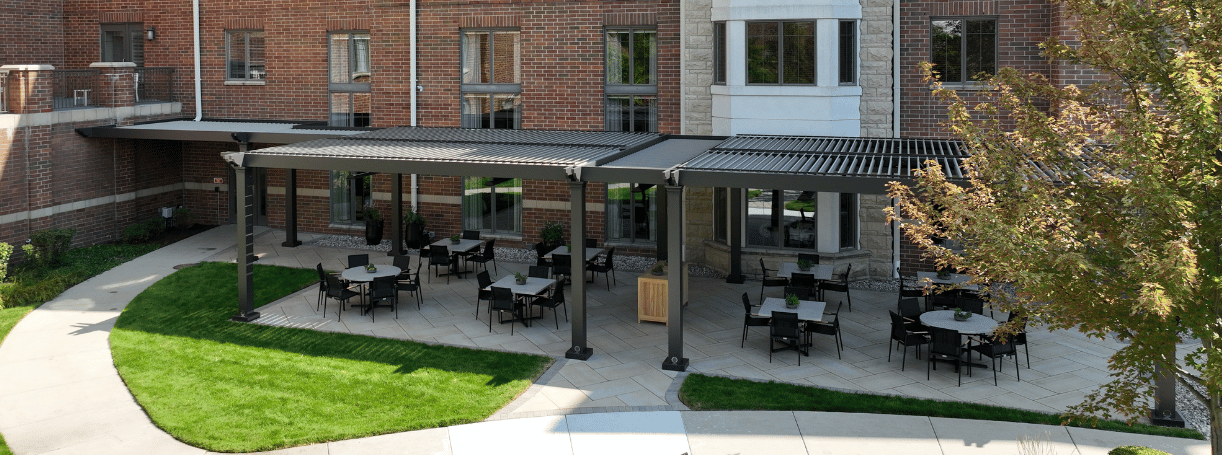
To make outdoor spaces usable year-round, consider installing adjustable shade structures. StruXure’s louvered pergola systems, such as the Pergola X and Evolve, are made from powder-coated aluminum, ensuring the same durability and low maintenance as other hospital-grade materials.
These systems give patients and staff the ability to control sunlight and airflow, which can significantly reduce stress. Adjustable louvers let users adapt to changing weather conditions, and integrated sensors automatically close the louvers when it rains. This feature protects furniture and ensures outdoor therapy sessions or relaxation time can continue without interruption.
Shade structures, especially when integrated with ceiling fans, can lower outdoor temperatures by 10°F to 25°F, making gardens accessible even during the hottest days. Position these systems over pathways or seating areas to create shaded resting spots. This is a thoughtful touch for elderly or frail patients.
The modular design of StruXure systems allows for seamless integration with existing hospital architecture. Unlike wood pergolas that demand regular upkeep, powder-coated aluminum retains its finish and structural integrity through years of exposure to the elements.
Step 4: Add Healing Elements and Shade
Include Natural Elements
Integrating plants and water features into hospital outdoor spaces can turn them into true healing environments. Studies reveal that patients with access to nature feel up to four times better than those staring at walls, and they request 22% less pain medication. This isn’t just about making spaces look nice. It is about improving recovery outcomes.
Design the garden to stimulate all five senses. Use seasonal flowers to keep the space visually engaging throughout the year, and plant fragrant herbs like lavender, rosemary, and thyme near seating areas. These scents help calm the mind without overwhelming patients who may be sensitive. Add textured plants at easy-to-reach heights, allowing patients to interact with nature safely. It has been shown that access to nature can alleviate stress and improve mood, which is crucial for patient recovery.
Water features also contribute significantly. The Healing Garden at Einstein Medical Center, built in 2013, includes waterscapes that offer soothing sounds and serve as visual highlights. Small fountains or rock bubblers near seating areas can help block out hospital noises, like sirens and pagers, creating a calming atmosphere that reduces pain and anxiety. Spending just 3 to 5 minutes in such a space can make a noticeable difference in stress levels.
Native greenery should dominate the landscape. Choose plants that attract birds and butterflies to create a lively, interactive setting that connects patients with nature. This connection is vital for recovery and adds another layer of comfort to the garden. Once these healing elements are in place, the focus shifts to providing shade for added comfort.
Create Shaded Seating Areas
Shaded seating is essential to complement the healing benefits of natural elements. Many patients, such as those undergoing chemotherapy or taking psychiatric or HIV medications, are more sensitive to UV rays and need protection from direct sunlight. Thoughtful shading solutions enhance comfort while aligning with the durable and low-maintenance design principles already discussed.
Offer a variety of seating options to cater to different needs. Some patients may seek quiet solitude, while others might prefer spaces for socializing. Place shaded seating along pathways and in larger gathering areas under structures like pergolas or gazebos. A great example is the Elizabeth & Nona Evans Restorative Garden in Cleveland, which features distinct zones for reflection and interaction, all equipped with shaded seating to aid recovery.
StruXure pergolas provide adjustable coverage that adapts to the time of day and weather conditions. These systems ensure the outdoor space remains functional and inviting while maintaining views of the natural surroundings. The result is a balanced and effective healing environment.
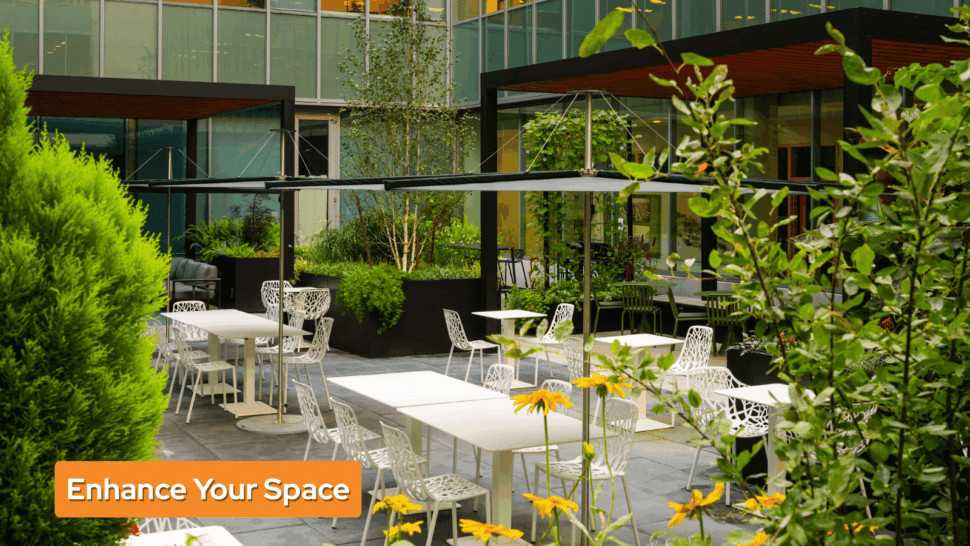
Garden Living | Ontario, CA
Step 5: Plan for Weather Protection and Maintenance
Design for All-Weather Use
Hospital outdoor spaces need to function seamlessly regardless of the weather, whether it’s rain, intense sun, or fluctuating temperatures. The trick lies in choosing structures and materials that can handle these changes while preserving the calming, healing atmosphere you’ve created.
Adjustable StruXure systems offer dynamic weather control. With optional automated sensors that respond to rain and wind, the louvers can adjust automatically as conditions change. For example, the louvers can close completely during an unexpected downpour to provide full coverage or open on mild days to let in fresh air. This adaptive design implements passive solar protection while optimizing natural daylight and ventilation.
In areas prone to high winds, arched entryways can improve stability. Hurricane shutters offer additional protection during extreme weather. For effective drainage, anti-ligature canopies with hidden downpipes not only prevent water damage but also eliminate safety risks from exposed hardware. These thoughtful design elements ensure the outdoor space remains durable, functional, and easy to manage.
Simplify Maintenance Requirements
Once the space is weatherproof, focus on reducing maintenance demands by making smart material choices. For instance, The Christie at Macclesfield cancer treatment center, in 2021, installed precast concrete benches known for their durability and minimal upkeep. These benches also assist patients with mobility challenges and double their utility.
For plantings, select species that are not only native but also known for their hardiness. Plants adapted to the local environment are inherently more resilient, requiring less irrigation and better withstanding regional weather patterns like heavy rain and strong winds. They also reduce the need for frequent replacements.
For pathways, use expansion joints no wider than 1/8 inch to prevent debris buildup and avoid tripping hazards, especially for patients using canes or walkers. Place trash bins strategically and establish a seasonal schedule for tasks like pruning, trimming, and winterizing. This approach keeps the space looking therapeutic while minimizing the workload for staff.
Designing hospital outdoor spaces requires a thoughtful balance of accessibility, durability, and comfort. By focusing on five key steps (understanding user needs, creating accessible layouts, choosing weather-resistant materials, incorporating natural and healing elements, and planning for weather protection), you can craft spaces that enhance patient recovery while supporting the daily demands of hospital operations.
Research shows that patients with access to nature recover up to four times faster, need less pain medication, and interact more positively with staff. For example, Zhongnan Hospital in Wuhan introduced a healing garden featuring diverse plants, water features, and accessible pathways. This addition not only boosted patient mood and reduced stress but also contributed to quicker recovery times. Such findings highlight the critical role of integrating natural elements into outdoor designs.
Weather protection and material choices are equally crucial. Reliable systems like those from StruXure, featuring automated louvers, allow outdoor spaces to adapt seamlessly to changing weather. These systems ensure year-round usability by providing shade, closing during rain, or opening for fresh air on pleasant days. This flexibility helps maximize the therapeutic and functional value of outdoor areas.
Outdoor spaces are no longer just decorative features. They provide real health benefits, fostering a supportive environment for patients, families, and staff.
FAQs
What outdoor features help patients recover faster?
Access to outdoor features like gardens, green spaces, and natural environments can play a big role in speeding up recovery. These elements help lower stress, ease anxiety, and even reduce the perception of pain. Features such as natural light, proper ventilation, and views of greenery are known to boost mood, improve sleep quality, and enhance overall well-being. Hospital gardens designed with therapeutic intent provide a soothing atmosphere, offering support for both emotional and physical healing.
How do we make hospital paths safe for wheelchairs and walkers?
To make hospital paths safe for wheelchairs and walkers, prioritize even, slip-resistant surfaces and ensure pathways are wide and free of obstacles. Incorporate gentle slopes for ramps to accommodate mobility devices and install clear, easy-to-read signage to aid navigation. Regular maintenance is key. Repair cracks or uneven sections promptly to avoid hazards. Additionally, promote safe practices such as proper use of mobility aids and keeping hands securely on devices to enhance safety for everyone.
How can outdoor hospital spaces stay usable in rain, heat, and wind?
To ensure outdoor hospital spaces remain functional year-round, it is essential to incorporate features that address various weather conditions. Architectural elements like pergolas or shelters can provide much-needed shade during sunny days and protection from rain. For a truly adaptable solution, StruXure’s innovative pergola systems feature adjustable louvers that can pivot to block the sun or seal out rain, offering on-demand weather protection. Using durable, weather-resistant materials for these structures ensures they can endure harsh conditions without frequent repairs.
Another key consideration is incorporating climate-resilient designs, such as effective stormwater management systems, to handle heavy rain or potential flooding. These thoughtful additions help create outdoor areas that remain comfortable and practical for both patients and staff, no matter the season.