Design Your Perfect Outdoor Space
As severe storm systems move toward the coast, your outdoor space is usually the most exposed area of your home. High winds can damage standard outdoor shade covers like louvered pergolas, leaving homeowners wondering how to safeguard their outdoor living space before tropical-force winds make landfall.
This guide covers the exact pre-storm protocol designed for your StruXure pergola, ensuring your system performs safely as engineered when severe weather strikes.
Table of Contents
The Core Rule: Protecting Your Louvered Roof
Protecting a louvered pergola during severe weather relies on two foundational principles: relieving air pressure across the roof and isolating the electrical system from potential grid surges.
While the objective is straightforward, executing it requires specific timing. Relying solely on automated weather sensors during a major storm creates a significant liability. If power drops before wind triggers the sensor, the system loses power, leaving louvers closed or trapped halfway open during peak wind gusts. Following the step-by-step sequence below ensures your system is properly prepared before tropical-force winds reach your area.
The Science of High-Wind Resistance
When asking how much wind a pergola can withstand, structural engineering and louver position tell the whole story. StruXure Pivot 6 louvers handle wind speeds up to 150 mph when locked in the fully open position.
To prove this performance under pressure, StruXure partnered with Frank Bennardo, PE of Engineering Express, to earn internationally recognized ICC certification. For homes located in strict High Velocity Hurricane Zones (HVHZ), StruXure pergolas can also be site-engineered to meet Miami-Dade County building codes.
For property owners, this built-in engineering provides total peace of mind. Internal wiring routes directly through heavy-gauge extruded aluminum posts, shielding delicate electrical lines from driving coastal rain. Additionally, post footings in high-wind zones rely on specialized anchor bolts sealed to prevent water intrusion during heavy storm surges.
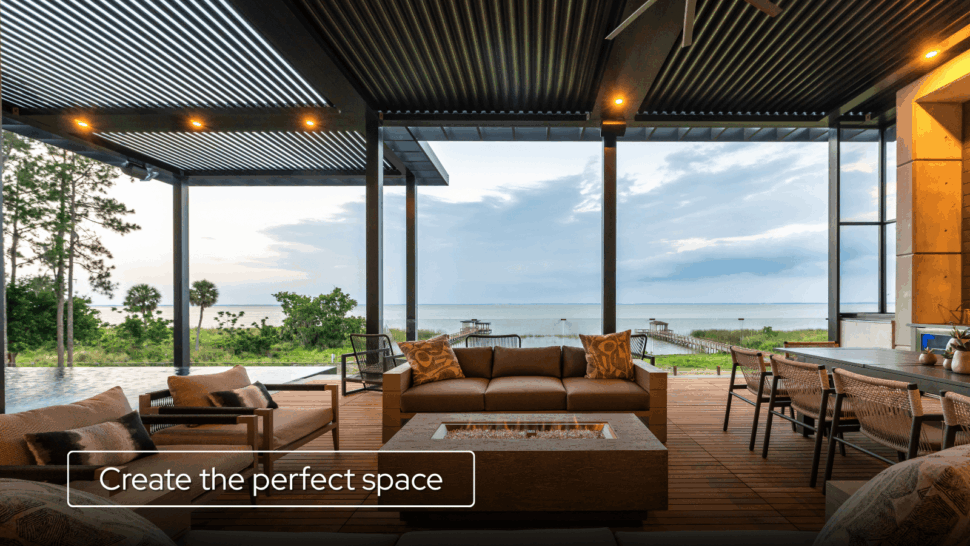
Step-by-Step Storm Preparation Checklist
Step 1: Understand Automated Weather Sensors (e.g., Breeze Pro)
Automatic opening during sudden gusts is not an inherent mechanical feature of the frame alone. It requires an integrated weather sensor, such as the Breeze Pro.
When equipped with a Breeze Pro sensor, your system monitors real-time wind conditions and automatically triggers the louvers to open around 60 mph. This built-in safety buffer prevents sudden tropical gusts from catching closed slats off guard. This automated feature is also valuable if severe weather hits while you are away from home or traveling.
Step 2: Manually Lock Louvers to Fully Open
If possible, avoid exclusively relying on automated sensors when a named hurricane is approaching your area.
Absolute Aluminum, a Florida StruXure Dealer, recommends the following:
“Fully open your adjustable roof a minimum of 48 hours prior to a wind event that is expected to exceed 60 m.p.h. If you have a wind sensor installed, it should open automatically. However, if you are still at home, please open it manually to eliminate the dependency on technology and be fail-safe.”
Using your handheld remote or mobile app, manually rotate the louvers to a fully vertical position. Opening the roof eliminates aerodynamic lift, allowing high-velocity winds to pass freely through the structure rather than catching it like a sail.
Step 3: Shut Off Power at the Main Breaker
Once your louvers are completely open, disconnect electricity to the pergola at your main breaker box.
Power surges, lightning strikes, and grid drops frequently occur during severe coastal storms. Cutting power prevents electrical surges from damaging internal motors and guarantees the louvers will not adjust or move for any reason during the storm.
Step 4: Clear the Area Beneath the Frame
High winds can transform loose outdoor items into destructive projectiles.
- Clear the footprint: Empty the entire space beneath your pergola structure.
- Protect motorized screens: Fully retract optional side screens into their protective housings.
- Trim surrounding trees: Cut back dead or overhanging branches that could fall onto the frame.
Local Prep Tip:
“Remove and store objects like lawn furniture, grills, and other outdoor accessories. If lifted and thrown against your pergola, these objects can cause significant damage. Store them in a garage or basement until the storm passes.” – Absolute Aluminum
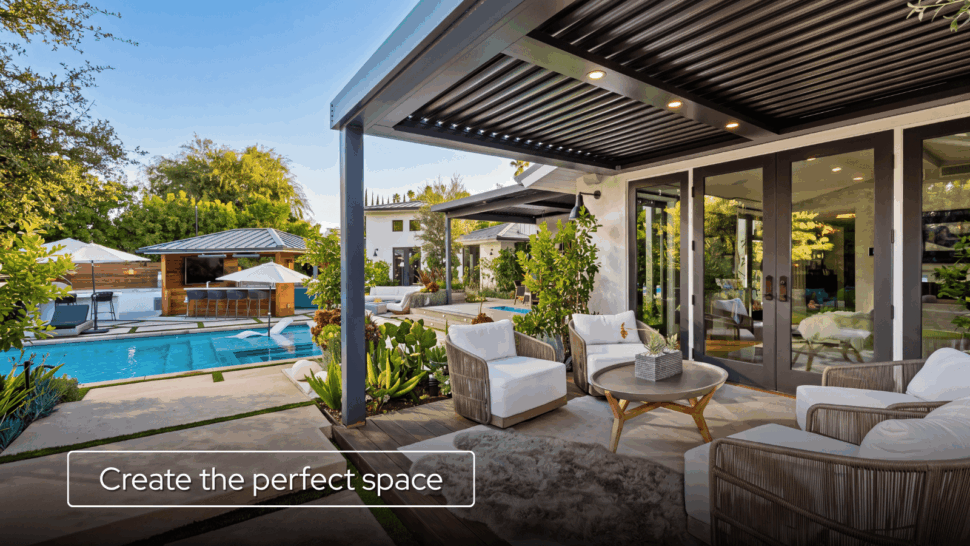
Regional Context and Coastal Installation Nuances
Installing a high-wind-rated StruXure pergola requires localized structural engineering. StruXure dealers provide custom engineering packages tailored to your specific property, whether anchoring a StruXure frame into a coastal concrete slab or pouring deep concrete piers in inland soil.
Site-specific engineering calculations also dictate whether a 4-post standalone Pergola X or a direct house-attached StruXure system is ideal for your lot. Properties directly along coastal waterways face higher wind exposure, and StruXure custom engineering drawings satisfy local municipal building permits to ensure full code compliance.
Prepping your louvered roof takes three simple steps: open the louvers completely, cut the breaker power, and clear the area underneath. By taking a few minutes to prepare before a storm arrives, you protect your outdoor living investment and ensure your system stays in peak condition for years to come.
Have questions about local coastal building codes, adding a Breeze Pro weather sensor, or scheduling a pre-season maintenance check on your system? Reach out to your local authorized StruXure dealer for expert service and advice.
Frequently Asked Questions
Do StruXure louvers open automatically during high winds?
Louvers only open automatically if your system is equipped with an integrated weather sensor, such as the Breeze Pro. Without a sensor installed, louvers must be opened manually using your remote or smart device.
Are louvered pergolas hurricane proof?
No outdoor structure is completely hurricane-proof due to unpredictable storm paths and flying debris. However, StruXure systems can withstand winds of up to 150mph, ICC certified, and can be engineered to Miami-Dade standards.
How much wind can a StruXure pergola withstand?
With louvers locked in the fully open position, systems carry wind load ratings up to 150 mph depending on the site-specific engineering plan.
What happens if power goes out before I open the louvers?
Once power goes out, motorized louvers cannot be adjusted mechanically. That is why StruXure strongly advises homeowners and business owners to take proactive action by opening louvers and turning off the main breaker well before a storm arrives.