Design Your Perfect Outdoor Space
Outdoor pergolas need to withstand harsh winters, especially in snowy regions. For StruXure’s Pivot 6 pergola louvers, ICC certification ensures they meet safety standards for snow load compliance, protecting the louvers from damage or collapse under heavy snow. This certification evaluates the louvers’ materials (such as aluminum vs. steel) and design, ensuring they can handle regional snow loads as outlined by the International Building Code (IBC).
Key Points:
- Snow load compliance is crucial for safety and legal requirements in areas with heavy snowfall.
- StruXure‘s pergola systems feature ICC-certified Pivot 6 Louvers, designed to handle snow loads of 20 to 70 pounds per square foot, depending on elevation and location.
- Certification simplifies permitting, ensures durability, and provides peace of mind for homeowners and businesses.
Why it matters: Without proper certification, pergolas risk structural failure, denied permits, and voided warranties. StruXure’s aluminum systems, backed by engineering expertise, offer reliable solutions for snowy climates.
ICC Certification and Snow Load Requirements
What is ICC Certification?
ICC certification is a product evaluation report that verifies that a structure meets safety standards set by the International Code Council (ICC) under the International Building Code (IBC) and International Residential Code (IRC). For outdoor structures like pergolas, this certification ensures they can withstand environmental stresses, including snow, rain, and wind.
The certification is based on the ASCE 7 standard (Minimum Design Loads and Associated Criteria for Buildings and Other Structures). This standard provides engineers with guidelines to calculate how much weight and pressure a structure can handle. Methods like LRFD (Load and Resistance Factor Design) or ASD (Allowable Stress Design) are used to confirm that loads are safely transferred from the roof to the foundation. If calculations alone aren’t enough, physical testing of components is conducted to verify their strength.
In 2021, the IBC updated its snow load maps to align with ASCE 7-16 standards. These updates include detailed snow tables for states with varying snowfall levels, ensuring structures like pergolas meet the specific requirements of their region’s climate.
For StruXure’s high-end pergolas, ICC certification is key to ensuring they can handle snow loads specific to their location. This certification process guarantees that the pergolas are built to last, even under challenging weather conditions.
Why Snow Load Compliance is Required
Snow load compliance is not just a recommendation. It’s a legal and safety requirement designed to prevent structural failures during harsh winters. In areas with heavy snowfall, the weight of accumulated snow can exert significant downward pressure, measured in pounds per square foot (psf). Without proper engineering, this pressure can cause sagging, permanent damage, or even collapse.
The IBC establishes these safety standards to protect both property and lives. These standards affect everything from obtaining permits to maintaining warranties and securing insurance coverage. Installing a pergola without proper snow load certification in a high-snowfall area can lead to denied permits, voided warranties, and costly liabilities if the structure fails.
To ensure safety and compliance, it’s crucial to work with manufacturers who offer ICC-certified systems and involve licensed engineers during installation. This approach not only meets legal requirements but also provides long-term reliability and peace of mind.
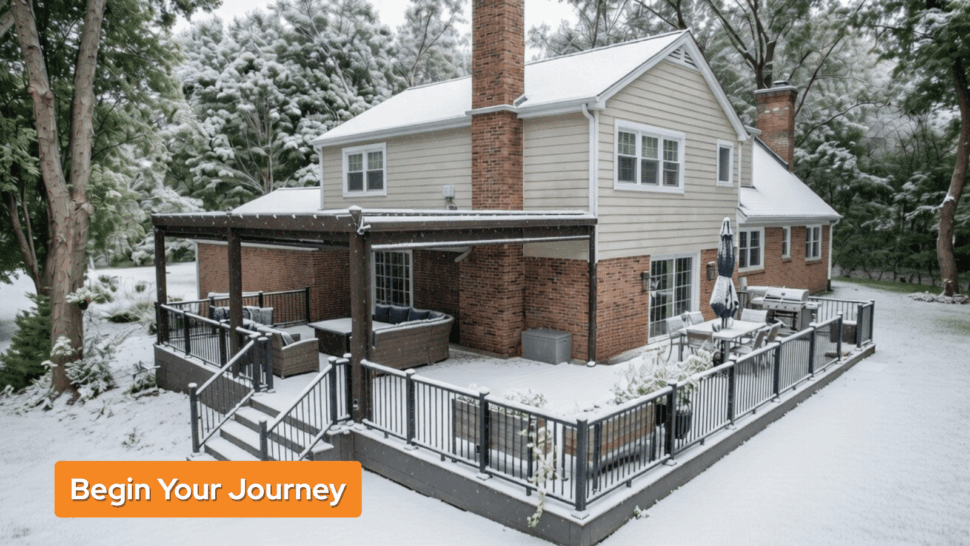
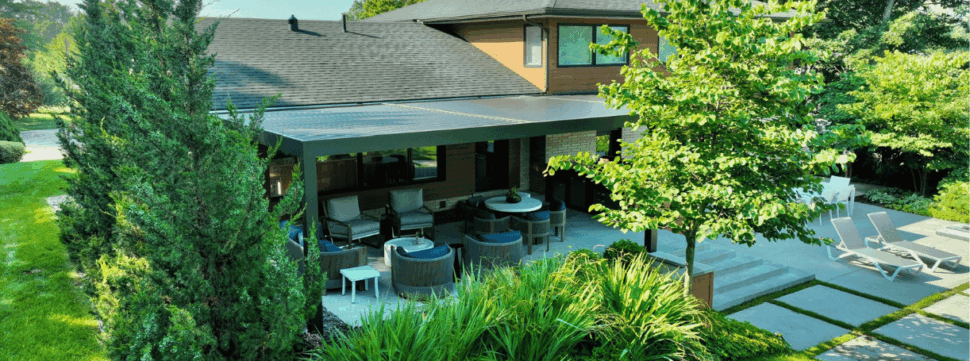
StruXure Northshore | Chicago, IL
Snow Load Standards and ICC-ES Reports
Snow load standards and ICC-ES reports play a critical role in defining the structural design requirements for pergolas, building on the foundation of ICC certification. These reports ensure that outdoor structures meet the International Building Code (IBC) and International Residential Code (IRC) by referencing ASCE 7 standards for calculating snow loads. Specifically, they evaluate structures based on the ground snow load (p₍g₎), measured in pounds per square foot (psf).
To determine a pergola’s flat-roof snow load (p₍f₎), engineers adjust the ground snow load using factors like exposure, thermal properties, and the structure’s importance. They also account for uneven snow accumulation caused by architectural features.
Modern building codes have moved away from the traditional 50-year Mean Recurrence Interval approach, opting instead for reliability-targeted design loads. This shift addresses past issues where some regions were under-designed while others were overly conservative. Snow weight can vary dramatically: fresh snow weighs about 3 psf per foot, heavy wet snow can reach 21 psf per foot, and ice weighs approximately 57 psf per foot, or roughly 5 psf per inch.
Regional Snow Load Variations
Snow load calculations must adapt to the diverse regional climates across the United States. Ground snow load requirements vary widely due to differences in climate, elevation, and geography. In the contiguous U.S., ground snow load values typically range from 10 psf to 140 psf. Heavier, wetter snow is more common in areas like the Eastern U.S. and coastal Alaska, while drier conditions prevail in the Western U.S., significantly impacting structural design.
Comparison Table: Regional Snow Load vs. Structure Ratings
The table below highlights how regional snow load requirements influence engineering practices:
| Region/Location | Ground Snow Load (psf) | Engineering Requirement |
|---|---|---|
| Low Snow Areas (Southern U.S.) | 10–20 psf | Standard IRC span tables |
| Moderate Snow Regions | 20–70 psf | Standard IRC span tables |
| High Snow Regions | 70+ psf | Structural engineer required (ASCE 7) |
StruXure ensures its Pergola X and Evolve systems are designed to meet these strict regional standards. Licensed engineers review and stamp plans to confirm compliance with local ground snow load requirements, guaranteeing reliable performance in both moderate and extreme conditions.
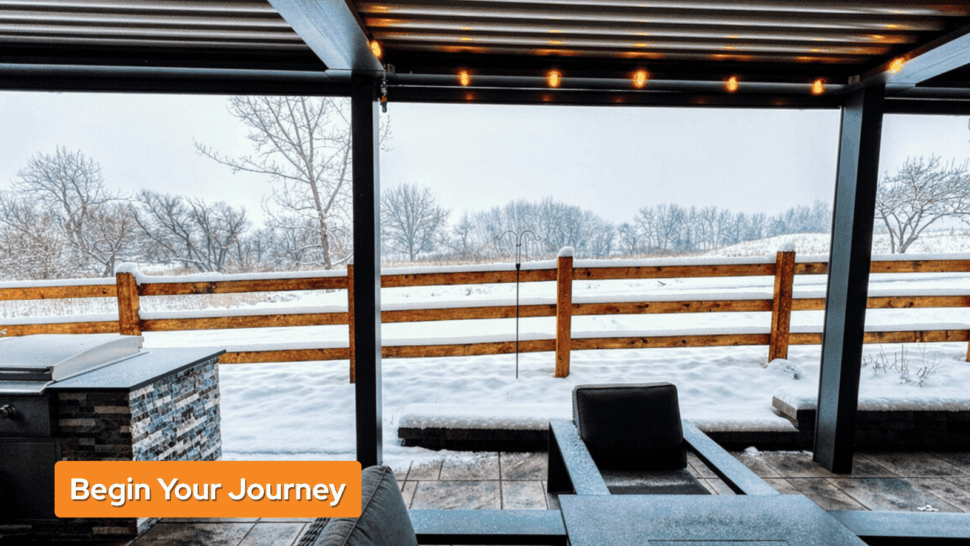
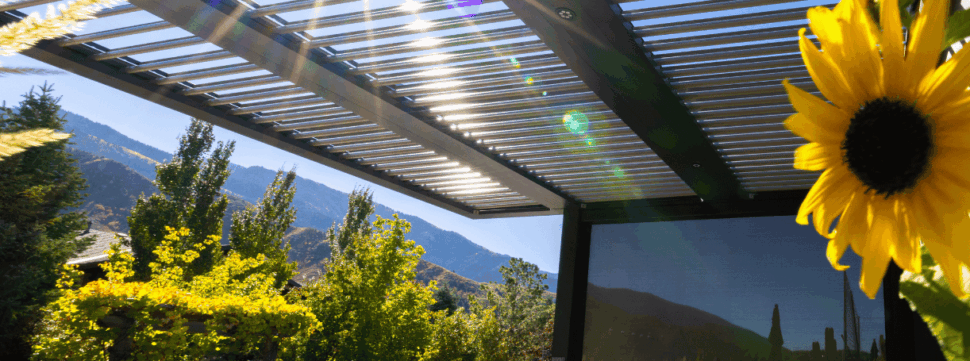
StruXure of the Rockies | Colorado
StruXure Pergola Systems and Snow Load Engineering
StruXure is the only louvered pergola manufacturer to earn ICC (International Code Council) certification. This certification doesn’t just assess individual parts. It evaluates the entire system, including louvers, beams, columns, and connections. As Frank Bennardo, PE, CEO of Engineering Express, explains:
“The ICC report provides a clear overview of the performance capabilities of the pergola system. It’s not just about the louvers; it encompasses the supporting beams, columns, and connections, all tested together for maximum wind and snow conditions.”
StruXure systems are made from high-tensile extruded aluminum, which boasts a strength-to-weight ratio 43 times greater than wood. Unlike wood pergolas that can warp or crack during freeze-thaw cycles, these systems are built to withstand harsh winter conditions. They are engineered to handle snow loads of 20 to 70 pounds per square foot (psf), depending on elevation and location. A 360-degree integrated gutter system efficiently manages snowmelt, channeling water away to help reduce ice buildup.
To meet specific regional requirements, licensed engineers can use ICC report data to ensure compliance with building codes, often speeding up the permitting process compared to uncertified systems.
Every StruXure system reflects a commitment to ICC-certified, snow–load–ready engineering. Let’s break down how each product handles snow load performance.
Pergola X: Snow Load Capabilities
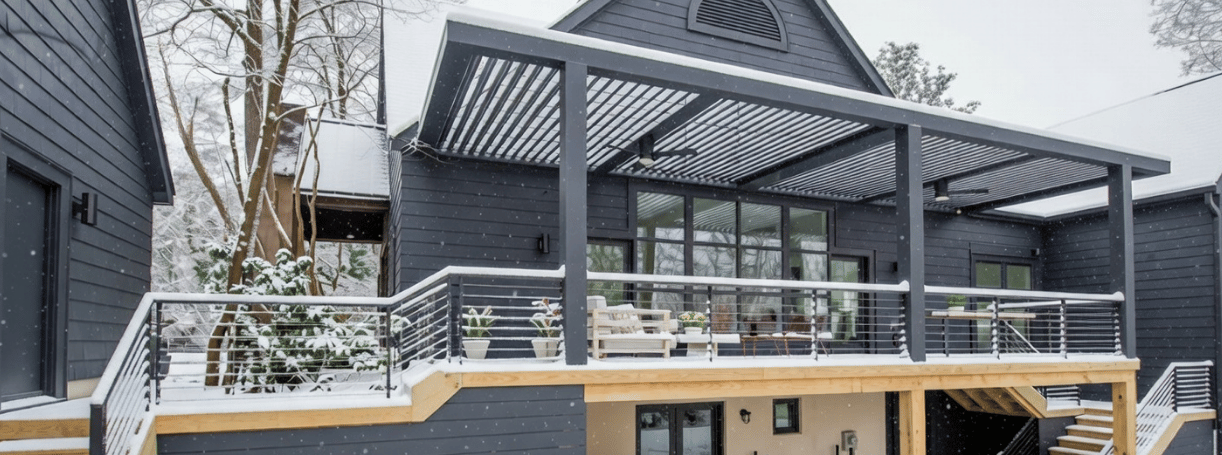
The Pergola X features patented interlocking louvers that form a watertight seal when closed. Its louvers rotate up to 170 degrees, allowing precise control to manage snow. During snowfall, opening the louvers prevents excessive weight buildup and freezing and is highly recommended.
The structure is coated with PPG2604 powder coating with a chemical texture matte finish, offering durability against weathering and corrosion in extreme winter conditions. Smart sensors further enhance performance by adjusting the louvers in response to weather changes. Rain sensors close the louvers at the first sign of precipitation, while wind sensors can open them at preset speeds of 60 mph or more to protect the structure. The Pivot 6 louvers have been tested to endure wind speeds up to 150 mph when fully open.
The Evolve system, a newer addition to the Pergola X line, takes snow load engineering to the next level.
Evolve: Advanced Snow Load Performance
The Evolve system builds on the Pergola X, offering enhanced strength and refined design for demanding environments. While maintaining the same high-tensile aluminum construction and ICC certification for its Pivot 6 Louvers, it’s tailored for regions with heavy snowfall. Licensed engineers can customize the design to meet site-specific needs.
The extruded aluminum construction resists structural damage caused by moisture and freezing temperatures. issues that often plague wood pergolas. StruXure backs these systems with a 15-year structural warranty, along with a limited lifetime warranty on certain components.
Through meticulous engineering and extensive testing, ICC certification ensures that every part of the system works together seamlessly. This certification verifies that pergolas can endure snow loads in harsh climates, with the entire structure – louvers, beams, columns, and connections – tested as a complete system. This guarantees reliable performance under challenging conditions like heavy snow and strong winds.
StruXure systems are designed to handle snow loads ranging from 20 to 70 psf, depending on location and elevation. The Pivot 6 louvers have been tested to resist wind speeds up to 150 mph, while the extruded aluminum construction prevents issues like warping, rot, or cracking caused by freeze-thaw cycles.
For homeowners and businesses in snowy regions, ICC certification simplifies the permit process and ensures the structure adheres to top safety standards recognized nationwide. With a solid foundation, secure anchoring, and proper upkeep, these systems offer dependable protection and durability.
Whether you choose a Pergola X, Evolve, or Cabana X system, the combination of ICC certification, snow load engineering, and weather-responsive technology ensures your outdoor space can withstand the elements while staying visually appealing. This thoughtful design approach highlights the reliability and safety of StruXure’s pergola systems, no matter the climate.
FAQs
Do I need an engineer stamp for my pergola permit?
Yes, an engineer’s stamp is often necessary when applying for pergola permits, especially if the structure needs to comply with specific snow load requirements or local building regulations. For instance, in places like Washoe County, a structural engineer’s approval is required if snow loads surpass 70 pounds per square foot.
What should I do during a heavy snowfall?
To protect your pergola during heavy snowfall, it is recommended to keep the louvers in an open position. This allows snow to pass through, reducing the accumulated weight on the structure and minimizing the risk of damage from excessive loads. If you notice any signs of stress, such as bending or cracking, it is crucial to consult a structural professional for a thorough evaluation.