Design Your Perfect Outdoor Space
Designing the perfect backyard escape often starts with researching the classics: gazebos, pavilions, and pergolas. Each of these structures has earned its place in outdoor design by offering a distinct way to define space, provide shelter, and create comfort outdoors. Although they may look similar, they serve vastly different purposes.
Understanding those differences is key to choosing a solution that truly complements how you live outdoors.
Gazebo: A Defined Destination in the Landscape
A gazebo is a freestanding outdoor structure, often constructed from wood, steel, or aluminum. They are traditionally recognized by their octagonal or circular footprint and solid, fixed roof.
Often placed away from the home, gazebos are designed to function as a destination within the landscape, a place you intentionally walk to, rather than an extension of your indoor living space.
The primary purpose of a gazebo is to create a sense of enclosure and retreat. Its solid roof provides dependable protection from sun and rain, while partial walls or railings offer privacy and intimacy. For homeowners seeking a quiet reading nook, a shaded seating area, or a dedicated spot for a hot tub, gazebos excel at creating a cozy, self-contained environment that feels separate from the rest of the yard.
Where gazebos differ from other structures is in their consistency. Once built, the experience they provide is intentional and unchanging. The solid roof offers reliable shelter and shade, and the enclosed form reinforces a feeling of separation and calm. This makes gazebos especially appealing for homeowners who value a predictable, protected outdoor experience.
At the same time, this permanence means the structure is designed around a single mode of use. Open sky views, direct sunlight, and increased airflow are not central to the gazebo’s design, making it best suited for those whose outdoor needs remain relatively consistent across seasons and occasions.
Pavilion: Permanent Coverage for Outdoor Living
Pavilions are larger, more architectural structures defined by a solid roof supported by columns or posts made of wood, concrete, steel, aluminum, or other composite materials. Often positioned close to the home, they are designed to cover expansive outdoor living areas such as dining spaces, seating zones, or full outdoor kitchens.
The primary role of a pavilion is to provide reliable, all-weather coverage. By offering consistent protection from sun and rain, pavilions create a sense of permanence and stability that many homeowners appreciate, particularly those who entertain frequently or want a dependable outdoor space regardless of the forecast. Furniture, appliances, and finishes remain protected, and gatherings can continue with minimal concern for changing conditions.
Because pavilions rely on a traditional solid roof, the experience they offer is intentionally fixed. Shade is constant, light is filtered, and the environment beneath remains largely the same throughout the day.
In spaces that include grilling or cooking, heat and smoke must be managed through layout rather than the structure itself. Pavilions are well-suited for homeowners who value permanence and protection over variability, and who prefer their outdoor spaces to function much like an open-air extension of the home.
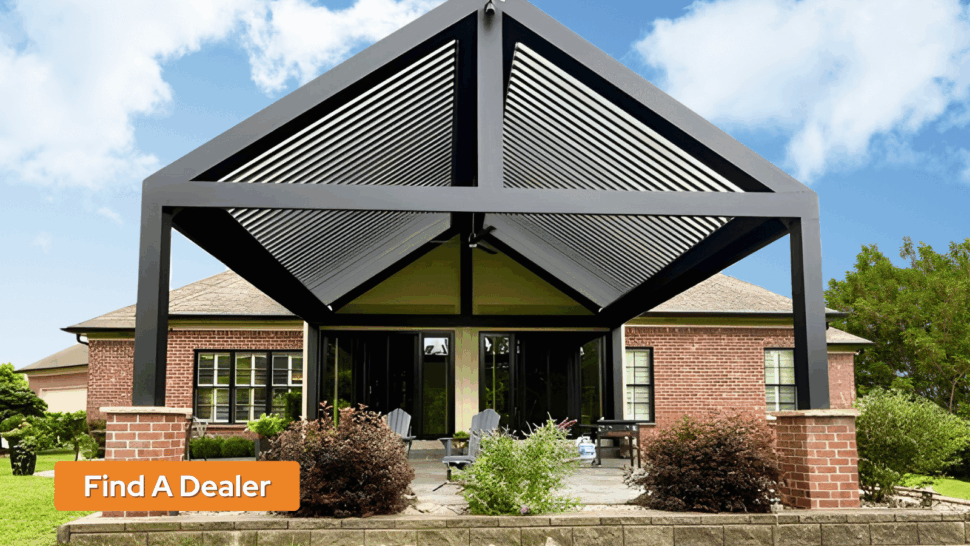
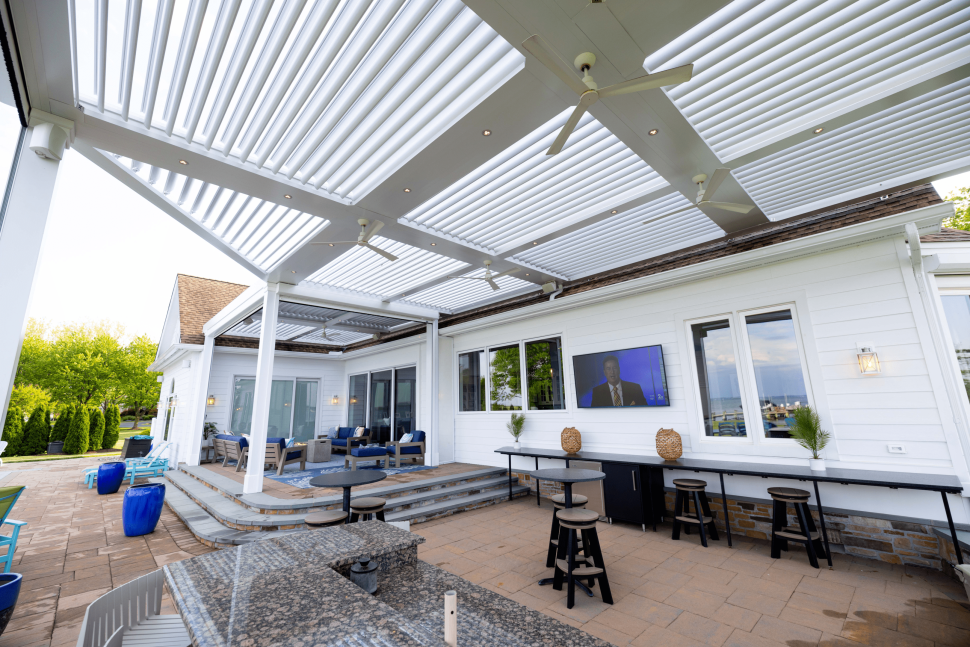
Louvered Outdoor | Kentucky
Pergola: Light, Open, and Architecturally Expressive
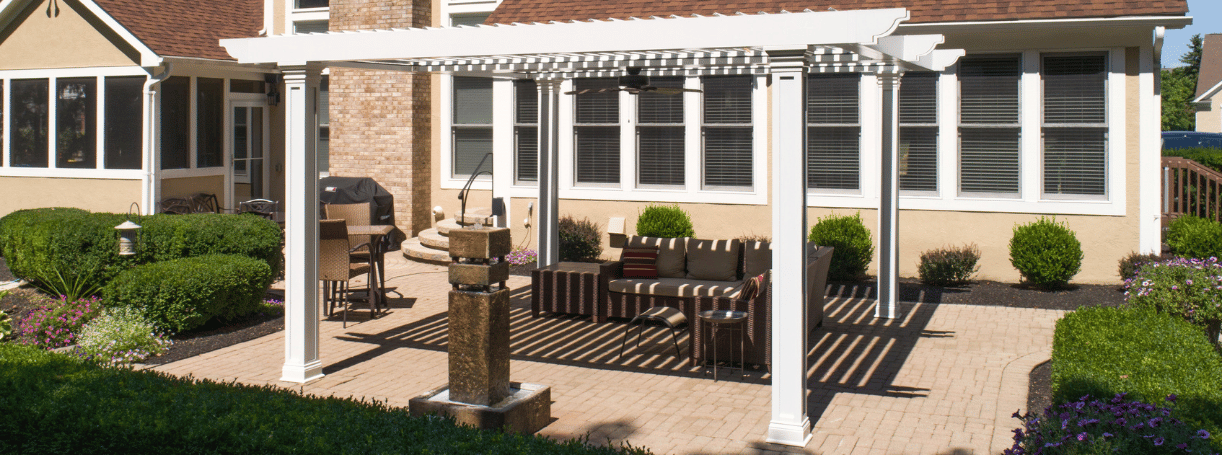
Traditional pergolas are typically constructed from wood and are defined by their open-slat roof design. They commonly feature evenly spaced beams that create partial shade without full enclosure. Rather than covering a space entirely, pergolas frame it, offering structure, rhythm, and visual interest.
The primary appeal of a pergola lies in its openness. Sunlight filters through the slats, air moves freely, and the space maintains a strong connection to the surrounding landscape. Pergolas are especially popular for homeowners who prioritize a light, airy atmosphere or who want a structure that supports climbing plants and softens hardscaped patios.
Because pergolas are intentionally open, the experience they provide changes throughout the day. Shade shifts as the sun moves, and exposure to weather is part of the design. For some homeowners, this dynamic quality is exactly what makes a pergola feel natural and relaxed. At the same time, this openness means pergolas are best suited for fair-weather use and decorative enhancement, rather than consistent shelter or weather protection. They define space beautifully, but they do not actively manage the environment beneath them.
Comparing the Traditional Options
Covered patios, pavilions, gazebos, sunrooms, and screened-in porches all create a stronger sense of enclosure while offering protection from sun, rain, and debris. These structures define an outdoor “room” and can improve comfort in certain climates, but their fixed construction limits how much they can adapt to changing conditions or privacy needs.
| Feature | Gazebo | Pavilion | Traditional Pergola |
| Roof Type | Solid, fixed | Solid, fixed | Open slat |
| Sun Protection | Consistent shade | Consistent shade | Partial, shifting |
| Rain Protection | Yes | Yes | No |
| Airflow | Limited | Limited | Excellent |
| Flexibility | Fixed experience | Fixed experience | Naturally variable |
| Best Use | Intimate retreats | Large covered spaces | Visual structure & light shade |
Each option excels within its intended purpose, but all three are built around a single, unchanging experience.
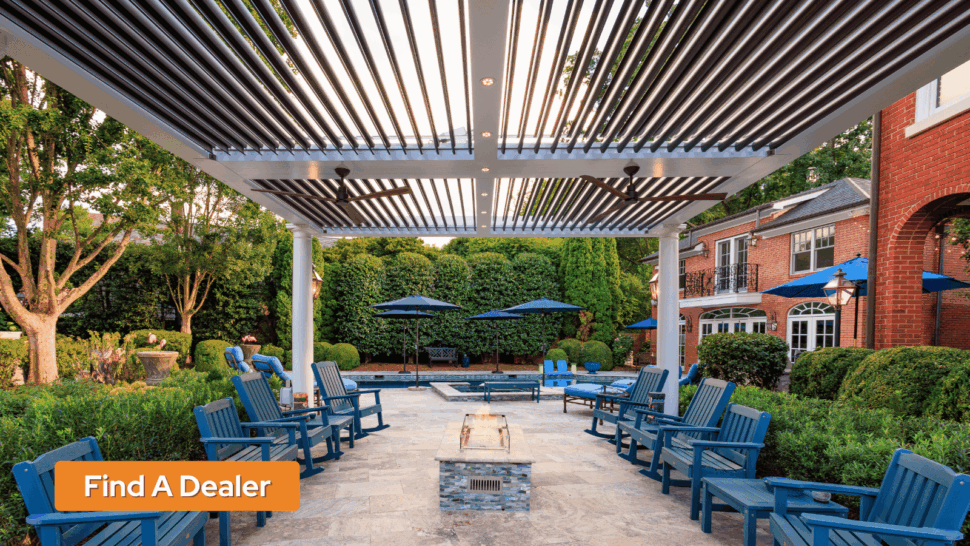
StruXure North Carolina | North Carolina
The Shift Toward Adaptable Outdoor Design
Curtains, retractable screens, and privacy panels are not standalone solutions, but flexible enhancements. As outdoor living continues to evolve, many homeowners are beginning to look for spaces that adapt as easily as the rest of their homes. Fixed roofs and static shade solutions can feel limiting when outdoor spaces are used for multiple purposes, including entertaining, cooking, relaxing, and gathering (often within the same day).
This shift has led to a growing interest in structures that offer flexibility without sacrificing architectural presence, such as the motorized louvered pergola.
What a Motorized Louvered Pergola Makes Possible
These modern-day aluminum pergolas represent an evolution in outdoor structure design defined less by permanence and more by choice. Rather than committing to a space that is always open or always enclosed, homeowners gain the ability to decide how their outdoor environment feels at any given moment. These pergolas are built around this flexibility, using precision-engineered louvers that rotate to actively manage sunlight, airflow, and weather in real time.
With the touch of a button, the experience can shift. Fully open louvers invite sunlight, sky views, and natural airflow, creating the same open-air connection traditionally associated with pergolas. Angled louvers allow homeowners to fine-tune shade while still maintaining ventilation, making the space comfortable even during the hottest parts of the day. When conditions change, the louvers can close completely, forming a protective overhead plane that shields the space from rain and preserves furniture, finishes, and accessories below.
Beyond overhead control, motorized pergolas also allow homeowners to define how enclosed the space feels horizontally. Retractable screens, privacy panels, and other integrated enclosure options can be added selectively, providing protection from wind, insects, or neighboring views without permanently closing the space off. This layered approach allows the structure to feel open and expansive one moment, then intimate and sheltered the next, without altering the architecture itself.
Just as important, some of these systems are designed to adapt architecturally as well as functionally. Certain motorized pergolas can be configured to fit nearly any footprint, whether spanning a large outdoor kitchen, wrapping around a pool deck, or creating a smaller, more private retreat. Unlike traditional structures that rely on standard shapes, these systems can be customized to align with existing architecture, site conditions, and lifestyle needs.
For homeowners drawn to the warmth of traditional materials, design flexibility extends to aesthetics as well. Woodgrain finishes allow motorized pergolas to capture the look of natural wood while maintaining the performance, durability, and low maintenance of aluminum construction. The result is a structure that feels timeless in appearance, yet modern in function.
How They All Compare
| Capability | Gazebo | Pavilion | Traditional Pergola | StruXure Louvered Pergola |
| Adjustable Sun Control | No | No | No | Yes |
| On-Demand Rain Protection | Yes | Yes | No | Yes |
| Ventilation for Cooking | Limited | Limited | Natural only | Actively controlled |
| Light & Air Flexibility | Fixed | Fixed | Passive | Fully adjustable |
| Privacy Options | Limited | Limited | None | Modular panels & screens |
| Ability to Evolve Over Time | No | No | No | Designed for flexibility |
A well-designed backyard should feel as intentional and responsive as the home it surrounds. While gazebos, pavilions, and traditional pergolas offer timeless solutions, motorized pergolas expand what’s possible, blending structure, comfort, and adaptability into a single architectural system that evolves with the way you live outdoors.
If you want to discuss louvered pergolas, click “Find A Dealer” and fill out the form to get connected with a certified StruXure dealer.